BKB Precision

Science Park Eindhoven 5208
Son,  Noord Brabant  5692 EG

Netherlands
http://www.bkbprecision.com
  • Booth: B1534


BKB Precision: high performance plastics machining

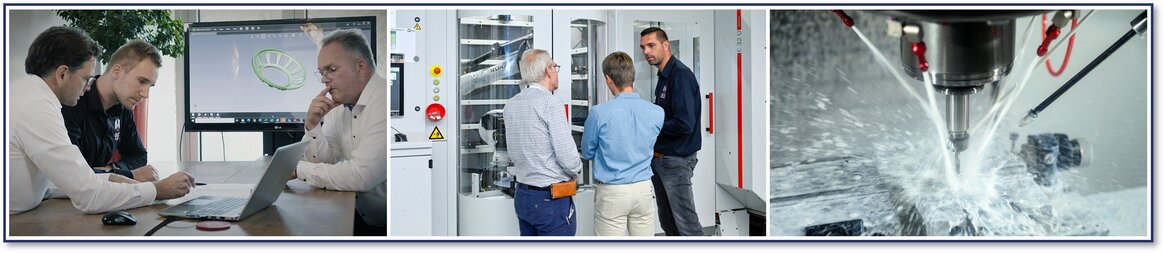
The core activity of BKB Precision is accurate machining high-performance plastics up to a precision of up to 3um. BKB Precision is a specialist in the production of high performance plastic parts for more than 40 years. We are active in various high-tech market segments and process technical plastics, high performance plastics and foam materials. The years have learned that BKB Precision has been a reliable partner for machining high performance plastics for the High Complexity, Low Volume, High Mix high tech markets. BKB Precision is not only your manufacturing partner but also your supplier when it comes to realizing your assembly and supply chain needs. For complex products, we use 5-axis milling. When working with large plates, we rely on our portal milling machines. Turning parts are crafted using CNC turning machines and turning/milling combinations. Moreover, we provide services like assembly, cleaning, careful packaging, and product testing. We attach great importance to intensive contact between engineers, clients’ , buyers and our own people who make the products. From prototypes and single pieces to medium-sized series, we deliver the precision you need worldwide. BKB Precision, along with ANKRO Kunststof Verspaningstechnieken and BLW Kunststoffen, is part of BKB Precision Group. Visit us at C1 329, this booth is powered by High Tech NL / Holland Semiconductors. BKB Precision is a co-exhibitor.


 Press Releases

  • Innovative products require more than innovative ideas—they require the right partners. By bringing together application expertise, material knowledge, and manufacturing experience from the very beginning, OEMs can reduce time-to-market, development risks, improve production efficiency, and create more reliable plastic components. Discover how the Product Efficiency Partnership (PEP) approach supports better products throughout the entire lifecycle.


    Close Collaboration as the Key to Efficient and Reliable Plastic Components

    As high-tech systems become increasingly sophisticated, engineers face growing pressure to combine advanced functionality with reliable and cost-efficient manufacturing. In industries such as semiconductors, medical technology, and analytical instrumentation, product reliability is critical. At the same time, tolerances have tightened to the micrometer range, product designs have become more complex, and production volumes are often smaller than in traditional manufacturing. Many of these products are also used in cleanroom environments, where even the smallest contamination can affect process stability.

    In these demanding applications, uptime is essential. Unplanned downtime can disrupt critical manufacturing processes and lead to significant costs. Engineers at OEMs and their suppliers therefore face the challenge of balancing functionality, manufacturability, quality, and cost throughout the entire product development process.

    Every product passes through a complete lifecycle - from concept development and prototyping to series production and, eventually, end-of-life. The earlier manufacturing expertise becomes part of this process, the greater the opportunity to optimize both the product and the production method. Rather than adapting a finished design to existing manufacturing capabilities, close collaboration between development teams and manufacturing specialists creates opportunities to improve functionality, simplify production, and achieve a more efficient and reliable end product.

    This collaborative approach becomes even more valuable when metal components are replaced by high-performance engineering plastics. Materials such as PEEK, POM, PEI, PI, and PTFE offer significant advantages, including corrosion resistance, electrical insulation, low weight, and non-magnetic properties. However, simply replacing metal with plastic rarely delivers the desired outcome. Plastics respond differently to temperature, humidity, mechanical loads, and machining processes, requiring a different engineering approach. By combining application expertise with manufacturing knowledge from the earliest stages of development, engineers can fully leverage the potential of these materials while meeting demanding functional and production requirements.
    3%20Steps%20of%20PEP%20-%20Horizontal.jpg?format=.jpg&upscale=False&x=1164
    The three phases of the Product Efficiency Partnership (PEP): From the first product concept to reliable series production: The Product Efficiency Partnership (PEP) combines engineering expertise and manufacturing knowledge at every stage of development.


    Why Early Manufacturing Expertise Matters in OEM Product Development

    OEMs and their suppliers face increasing pressure to bring innovative products to market faster while meeting stringent technical, regulatory, and economic requirements. Based on our experience working with engineering teams, several challenges arise repeatedly throughout the product development process.

    Accelerating time-to-market is a constant priority, yet products used in semiconductor, medical, and analytical applications must also comply with demanding quality standards and industry regulations. At the same time, manufacturers must optimize the Total Cost of Ownership (TCO) across the entire product lifecycle - not just minimize the cost of the first production batch. Limited engineering resources and specialized manufacturing expertise can further complicate these challenges.

    This is where early collaboration makes a measurable difference. With more than 40 years of experience in precision plastic machining, BKB Precision supports OEMs by integrating manufacturing expertise into the development process from the outset. Design modifications are typically straightforward during the concept and prototype phases but become significantly more complex and expensive once a design has been finalized. By considering manufacturability early, engineering teams can reduce development risks, improve production efficiency, and maintain compliance with technical and regulatory requirements.

    We call this collaborative approach the Product Efficiency Partnership (PEP). It begins with the initial product concept, where functional requirements, material selection, and manufacturability are evaluated together. Prototypes and proof-of-concept testing provide valuable insights that allow designs to be refined before production processes are established.

    As development progresses, manufacturing concepts are optimized alongside the product design. Pilot production validates both the manufacturing process and product performance under realistic conditions, ensuring a smooth transition to reliable series production. This structured approach helps OEMs accelerate development while improving quality, manufacturability, and long-term cost efficiency.


    From Product Design to Precision Plastic Manufacturing

    Efficient manufacturing starts with selecting the right production strategy. While many components require customized solutions, the goal is always to maximize the use of proven standard manufacturing processes wherever possible. This approach improves process stability, reduces complexity, and helps optimize the Total Cost of Ownership (TCO) over the product's lifecycle.

    The manufacturing process typically begins with precision machining on advanced 3-axis or 5-axis CNC milling machines or turn-mill centers. Depending on the component geometry and tolerance requirements, additional machining operations are performed to achieve the final dimensions. When standard workholding solutions are insufficient, custom fixtures and tooling are designed to ensure repeatable, high-precision production.

    Producing complex plastic components with tolerances of just a few micrometers requires state-of-the-art equipment. BKB Precision operates ultra-precision machining centers from Hermle, Mazak, and Okuma in climate-controlled production environments, where stable temperature and humidity help maintain dimensional accuracy of up to ±3 µm.

    After machining, every component undergoes careful finishing. Cold jet deburring efficiently removes burrs without mechanical contact, minimizing the risk of damaging delicate features or precision surfaces. Depending on the application, components are subsequently cleaned in a multi-stage ultrasonic cleaning system to remove particles and residues before further processing.

    For complete assemblies, bonding and assembly operations can be performed both inside and outside cleanroom environments. Plastic components are integrated with purchased parts to deliver ready-to-install assemblies that meet the cleanliness and performance requirements of demanding semiconductor, medical, and analytical applications.

    High-performance engineering plastics, including PEEK, POM, PEI, PI, and PTFE, form the foundation of this manufacturing process. These materials are sourced exclusively from qualified European suppliers to ensure consistent quality and material traceability. Achieving reliable machining results also depends on high-quality cutting tools and application-specific tooling. Although these investments may increase initial production costs, they significantly improve process stability, dimensional repeatability, product quality, and ultimately the Total Cost of Ownership.

    Turning Manufacturing Expertise into Better Products

    As high-tech products become more complex, the demands on OEMs and their supply chains continue to grow. Shorter development cycles, increasingly stringent quality requirements, and the use of advanced materials make early manufacturing expertise more valuable than ever.

    By involving manufacturing expertise from the earliest stages of product development, engineering teams can identify opportunities for optimization before designs are finalized. This collaborative approach helps improve functionality, streamline production, and reduce development risks.

    The Product Efficiency Partnership (PEP) brings together complementary expertise: OEMs contribute in-depth application and functional knowledge, while BKB Precision provides decades of experience in precision plastic machining and manufacturing optimization. This collaborative approach supports faster development, smoother production ramp-up, improved product quality, and a lower Total Cost of Ownership (TCO) throughout the product lifecycle.

    Successful products are rarely the result of design alone. They are created when engineering, materials expertise, and manufacturing knowledge come together from the very beginning.

    If you are developing a new product, optimizing an existing design, or evaluating the use of high-performance engineering plastics, involving manufacturing expertise early can reduce risk, improve production efficiency, and accelerate time-to-market. BKB Precision works alongside OEM development teams to transform innovative concepts into reliable, manufacturable products.

  • Within BKB Precision, we are constantly innovating and improving the manufacturing process and participating in challenging, innovative projects of our clients. One of our most recent projects is a great example of this. In collaboration with the client and suppliers, we took on a new challenge of machining a 3D-printed PEEK product, with several challenges to overcome.

    5-Axis milling of additive manufacturing products

    About 2.5 years ago, we were approached by a customer asking if we could also manufacture a certain titanium product from PEEK (Polyetheretherketone), which initially seemed like an impossible task.

    Such a development process often involves many challenges, where we have to push our limits and learn new skills. At BKB Precision, for example, we were faced for the first time with the task of post-processing a product produced by additive manufacturing using a 5-axis milling machine to meet very precise specifications.

    Moreover, during this development process we also learned how to place inserts with a very high frequency (20,000 hertz) in a product, which contributes to better adhesion and can be essential due to thin wall thicknesses.

    We have since worked with the customer to make this job a success and now produce several of these products every year.

    The challenge of new technology

    One challenge when turning or milling a 3D-printed product is that not all products have exactly the same dimensions. This leads to tight tolerances, especially when some parts are a millimeter or even a tenth of a millimeter longer or shorter. Normally we would then mill off that millimeter, but in this case that is not possible because it would make the interfaces too thin.

    Nevertheless, at BKB Precision we managed to find a method to accurately post-machine 3D printed products so that they meet the specifications provided by the customer.

    Unique collaboration

    Within BKB Precision, we take short lines of communication, transparency, openness and honesty for granted, a culture that also suits the participants within this project. This collaborative culture ensures good communication, preventing obstacles and keeping development cycles short.

    Because the product is already in use several times, more opportunities for improvement are still revealing themselves. The search for achieving the optimum of this product translates into changes in the specifications. BKB Precision makes every effort within the project to adopt those changes and translate them into the right machining strategies. With the ultimate goal of delivering a unique and relevant part for the right application.

    68ea0e70aa37e59ded5ed3c988298445-huge-ebox-vooraanzicht.jpg

  • What if the material you have used for years is no longer the most logical choice? Metal has long been the standard in technical applications across many sectors, but behind the scenes plastic has gained significant ground in recent years. What are the advantages of plastics? Is this a structural shift? And what should you know before making the switch?

    The history and rise of plastics

    Metal was the undisputed standard in manufacturing for decades, yet that certainty is now under pressure. Plastics have made an impressive advance in recent years as an alternative. Whereas they were once primarily used as cheap substitutes for everyday applications, we now have access to a wide range of technical and high‑performance plastics.

    Thanks to new production methods and growing insights into material properties, engineers are increasingly using plastics for demanding applications. Particularly in precision sectors such as semicon and analytical industries, where tolerances are minimal, plastic increasingly proves to be a smarter and better alternative to metal.

    ebf7d36969002474c1fba8d7ec360ffd-huge-image.png

    The advantages of plastic over metal

    The choice for plastic is increasingly based on technical and economic considerations rather than assumptions. The advantages speak for themselves:

    • Lighter weight without loss of strength

    • Corrosion resistant and low maintenance

    • High dimensional stability for precision machining

    • Low coefficient of friction

    • Saves costs on material, transport and production

    With the wide variety of plastics available today, there is always a type of plastic that fits your application.

    a380c1319e987fe1f4a25ed235958530-huge-image.png

    From metal to plastic: how that looks in practice

    The difference is sometimes in the details. A customer from the semicon sector faced a choice: continue working with metal or take the step to plastic. Together with BKB Precision they explored the possibilities. By smartly redesigning the component in plastic, it became over half a kilo lighter per item. That saving translated into lower material costs, reduced transport weight, and a more stable process.

    BKB Precision was involved from the start of this transition project: from material advice and machining techniques to cleaning and assembly. With our knowledge and experience we were able to respond quickly and jointly arrive at an optimal final product.

    We have since successfully supported multiple customers from the semicon, analytical and other industries in similar material transitions. Discover how the complete project progressed or contact us for more assistance with your project.


    From metal to eco‑conscious: how plastic contributes to sustainability

    In many applications plastic proves not only more practical, but also more sustainable than metal. It is lighter, corrosion‑resistant thus longer lasting, and requires less energy in production and use. Moreover, less mass also means lower emissions in transport, and reuse and recycling are increasingly feasible.

    At BKB Precision we take our responsibility seriously. Every year we publish our progress on sustainability and continuously work to further green our processes and decisions. Discover our approach in our most recent sustainability report via the button below.


    Future perspective: what can we expect?

    The shift from metal to plastic is still in its infancy. But thanks to ongoing innovations in materials, more advanced machining techniques and growing expertise among engineers, the application possibilities for plastics will only increase. Think of lighter machines, smarter designs and more sustainable manufacturing processes.

    At BKB Precision we push technical boundaries every day. We continually invest in knowledge, machinery and collaboration to maximize the potential of plastic machining, and we will continue to do so. What is groundbreaking today may become the new standard tomorrow.

    Curious how we can support you with your next project?

  • Plastic is highly suitable as a material for high-quality and leading high-tech applications. We see an increasing demand for technical and high-performance plastics for medical applications, aerospace engineering, semicon, the automotive industry, electronics, and optical and precision instruments.

    The reasons why plastic is chosen are different depending on the sector and application, but there are a number of advantages which apply to almost all of them. In this article, we list the 5 most common advantages of plastics for high-tech applications.


    1. Lightweight

    One of the biggest advantages of plastic over other materials such as metal is its low weight. This makes it possible for manufacturers to make their products even more energy-efficient, sustainable, useful, and environmentally friendly. Being made at the lowest possible weight can be a precondition for vehicle or aviation parts, housings, packaging materials, tank components, or medical devices. Machines which have housings made of plastic are easier to handle and transport.

    2. Maximal strength of high-performance plastics

    Different high-performance plastics have been developed to ensure excellent performance under extreme conditions. One example is PEEK, a very strong type of plastic with excellent tensile and flexural durability under varying loads and temperatures. Like PEEK, polyetherimide – or PEI – is one of the high-performance plastics. This type of plastic is widely used for aircraft components, partly because of its high mechanical strength. PAI (Polyamide-imide) also has excellent mechanical properties and is used for manufacturing parts which might be subjected to heavy loads.

    3. Ideal for high precision machining

    With the right expertise and advanced machinery, high-quality technical plastics can be processed very precisely. This makes plastic highly suitable for the manufacture of applications such as precision instruments. We do this by means of 3-axis milling, 4-axis milling or 5-axis simultaneous milling, a process in which all machining axes can be controlled simultaneously. At BKB Precision, we have 6 machines in our machine park in a climate-controlled environment, including robots. These machines make it possible to keep production going 24/7.

    In addition, we specialise in:


    4. Long lifespan for technical plastics

    Technical plastics have a longer lifespan than traditional materials. That makes these plastics highly suitable for applications where reliability and safety are of paramount importance. Examples include protective tubes for electricity and telecom cables, sewage systems, gas and water pipes, but also laboratory components and machine parts for the food industry. 

    Above all, a long lifespan results in lower maintenance costs, which means that increasingly more companies at home and abroad are looking to BKB Precision for the manufacture of high-quality plastic components for various high-tech applications.

    5. Resistance to external influences

    In many high-tech sectors, it is essential that the materials used are resistant to high temperatures, chemicals, and radiation. These are properties which can be found in various technical and high-performance plastics. We are happy to advise our customers on the right type of plastic to use for specific high-tech purposes. 

    Thanks to our expertise and years of experience in various market segments, we know exactly which engineering plastics are best suited for the desired purposes and outcomes. 

    We not only look at chemical and temperature resistance, but also at weight, dimensional stability, maximum strength, resistance to wear-and-tear, hydrolysis resistance, and, last but not least, processing options.

  • Not every material is suitable for applications where extreme conditions are the norm. High temperatures, aggressive chemicals and mechanical wear can limit the performance of plastics. PEEK offers a solution here thanks to its exceptional properties. But what makes PEEK such a unique material, and how do you get the most out of machining processes?

    The strength of PEEK

    What exactly makes PEEK so unique? This high-performance polymer combines the strength and wear resistance of metals with the flexibility and light weight of plastics. Whereas traditional plastics like PVC or PP deform quickly at high temperatures, PEEK retains its strength and structural integrity even under extreme conditions

    Compared to metals, PEEK offers not only weight savings, but also better resistance to corrosion and chemical attack. This combination of properties makes it an indispensable material in high-tech applications where precision and durability are paramount.

    Precision in PEEK machining: complex, but our expertise

    Machining PEEK seems simple at first glance, but it presents specific challenges. Due to its toughness and wear resistance, high friction occurs during turning and milling, which can lead to heat generation and deformation. This requires precise cutting parameters and special tools to keep the machining process stable.

    To achieve tolerances down to the hundredth of a millimeter, a perfectly balanced process is essential. Finishing also plays a crucial role: the wrong milling strategy can lead to a rough or damaged surface.

    How do we tackle this? At BKB Precision, we combine advanced machinery, specialist knowledge and strict process control and ensure an optimal end result every time.
    Advanced machinery with specialist knowledge and process control for a perfect end result. Not for nothing is PEEK the most frequently machined material in our workshop. 

    Hedelius machining PEEK

    Why choose PEEK? The most important advantages

    PEEK is a material that has proven itself in demanding industries. The main advantages for choosing this material are:

    • High temperature resistance up to approximately 280 °C

    • High wear resistance

    • Despite the strength of the material, it is lighter than many metals

    • Resistant to many corrosive substances

    • Biocompatible

    PEEK in the world of high-tech applications

    PEEK is a crucial material, especially for the medical and semicon industries, where reliability and precision are vital. In the medical industry, PEEK is widely used for implants and surgical instruments, increasingly replacing metals. This is because PEEK is more body-friendly and more resistant to wear.

    In the semicon industry, PEEK is an ideal choice for applications that operate under extreme conditions. Among other applications, the material is used for connectors and insulators where thermal stability and chemical resistance are essential. PEEK offers reliable performance in the production of semiconductor components that have high demands for accuracy and reliability.

    View several practical examples to the right or feel free to contact us with any questions!


 Products

  • Plastic Peek product
    <figure class="image"><img src="/user_content/review_items/photos/temp/0ccfa291918bd0e44cd23ef62c8dee61-huge-peek-13.jpg" alt="0ccfa291918bd0e44cd23ef62c8dee61-huge-peek-13.jpg" /></figure>...

  • 3D-printed product precisely finished by milling
    <figure class="image"><img src="/user_content/review_items/photos/temp/42ee7772f16aff202eb21e8e0d7aa1ca-huge-ebox-vooraanzicht.jpg" alt="42ee7772f16aff202eb21e8e0d7aa1ca-huge-ebox-vooraanzicht.jpg" /></figure>...

  • High-Precision PEEK Components
    <figure class="image"><img src="/user_content/review_items/photos/temp/3c19b0b0b08f0b43877333cd1a381297-huge-peek-15.jpg" alt="3c19b0b0b08f0b43877333cd1a381297-huge-peek-15.jpg" /></figure>...

  • Complex CNC Milled Part
    <figure class="image"></figure>...

  • Tight-Tolerance Turned Part
    <figure class="image"></figure>...

  • Thin-Wall Precision Machining
    <figure class="image"><img src="/user_content/review_items/photos/temp/7e1f1197986182e9dda38b555e7cc610-huge-peek-19.jpg" alt="7e1f1197986182e9dda38b555e7cc610-huge-peek-19.jpg" /></figure>...


Send Email

Type your information and click "Send Email" to send an email to this exhibitor. To return to the previous screen without saving, click "Reset".